Plano Chapter 13 Bankruptcy Lawyer
Respected Chapter 13 Bankruptcy Lawyers.
 You do not have to face your financial problem alone. When you get sick, you go to a certain type of doctor according to what type of illness you are suffering. That doctor is trained and experienced in that type of medicine, and he/she knows how to make you well. The same is true when you are suffering from a debt problem. You need a trained and experienced bankruptcy attorney to advise you of the best solution to cure your financial ailments. You need Mr. Pelley’s guidance to financial freedom.
Chapter 13 vs. Chapter 7: What’s the Difference?
When choosing between Chapter 13 and Chapter 7, it’s important to understand how each option works and who qualifies. Chapter 7 is often a quicker process but requires passing a means test, which compares your income to Texas median levels. Those who earn above that threshold may not qualify, which is where Chapter 13 becomes a more suitable alternative.
Unlike Chapter 7, which involves liquidating non-exempt assets to pay creditors, Chapter 13 allows you to reorganize your debts into a repayment plan while keeping your property. This structure can be especially helpful if you’re looking to maintain ownership of your home or vehicle while catching up on missed payments over time. Many individuals begin exploring bankruptcy options after noticing financial red flags.
Working with a Chapter 13 Bankruptcy Attorney can offer a path to regain control without starting from scratch. Chapter 13 may be a good fit for people who have fallen behind on secured debts but still have the means to catch up through a structured repayment plan.
Why File Chapter 13 Bankruptcy?
A Chapter 13 bankruptcy is designed for people who are: (1) behind on their house payments and their property is about to be foreclosed upon; or (2) behind on their vehicles and their cars are about to be repossessed. It is also designed for people who owe the IRS, or those who simply make too much money each month to remain in Chapter 7. Chapter 13 has several advantages. For instance, we are often able to substantially reduce your payments on your vehicles. However, either Chapter 7 or Chapter 13 will typically allow you to discharge all of your unsecured debts!
Misconceptions
A common misconception is that if you file a Chapter 13 bankruptcy, you will be required pay back your credit card or other similar unsecured non-priority debt. To the contrary, that is rarely the case. Most of our Chapter 13 clients pay back none or an extremely insignificant amount of their unsecured debts.
Most people also mistakenly believe that bankruptcy will destroy their credit. To the contrary, your credit score will improve after you get your discharge if you follow our advice. Bankruptcy law was not written to kick you while you are down. The whole point is to give you a fresh financial start.
An integral part of obtaining a “fresh start” is the rehabilitation of your credit. We will counsel you on how to rehabilitate your credit.
How Chapter 13 Bankruptcy Protects My Assets
One of the key protections Chapter 13 provides is the automatic stay, which stops creditors from pursuing foreclosure or vehicle repossession as soon as the case is filed. This immediate relief gives you time and space to address overdue payments through a court-approved plan. If your home is at risk, filing under Chapter 13 can be an effective way to halt foreclosure proceedings.
Chapter 13 also allows for lien restructuring, meaning you can roll overdue mortgage or auto loan payments into your repayment plan. With the guidance of a Chapter 13 attorney, many people are able to retain property that would otherwise be lost under Chapter 7.
What Debts Can Chapter 13 Discharge?
A Chapter 13 Bankruptcy Attorney can help clarify which of your debts can be discharged at the end of your plan. Typically, unsecured debts such as credit card balances, medical bills, and personal loans may be wiped out once you complete the repayment period. This can offer significant relief if you’ve been struggling under the weight of multiple bills.
However, not all debts are eligible for discharge. Obligations like child support, recent tax debts, and those tied to fraudulent conduct must still be paid. Understanding how your debts are classified and which types are dischargeable is an essential part of planning your financial recovery.
Are There Special Rules for Chapter 13 Bankruptcy in Texas?
The state offers some of the most generous bankruptcy exemptions in the country, which is a major advantage for those filing under Chapter 13. For example, the state’s unlimited homestead exemption often allows people to protect the full value of their primary residence. A Chapter 13 attorney can help apply these local protections to preserve your most important assets.
Texas also uses its own median income standards to determine whether you qualify for Chapter 7 or must file under Chapter 13. These state-specific thresholds influence your eligibility and the structure of your repayment plan, making it important to work with someone familiar with how Chapter 13 functions in Texas.
Schedule Your Free Consultation Today!
Contact our legal team right now to schedule a free confidential consultation. You will be under no obligation to hire us, and you will then know your alternatives. We look forward to speaking to you and explaining how we can help. Call us at 972-608-0335 today.
The best way of predicting your future is to research the results we have achieved in the past.
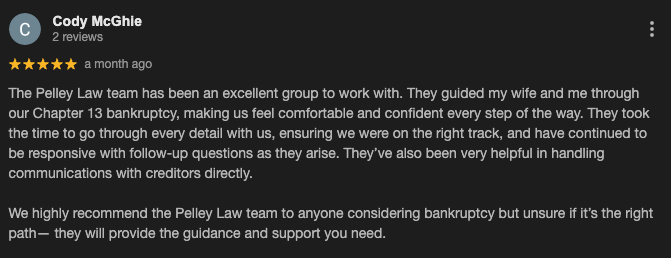
Client Review
https://share.google/LCkKvSfIDr2c3bMTz
Read more of our reviews on Google.
Locations
A Free Consultation
Fields Marked With An * Are Required

© Copyright 2026 Pelley Law Office, L.L.P.. All Rights Reserved.
