Can I Refuse a Breathalyzer Test in Texas?
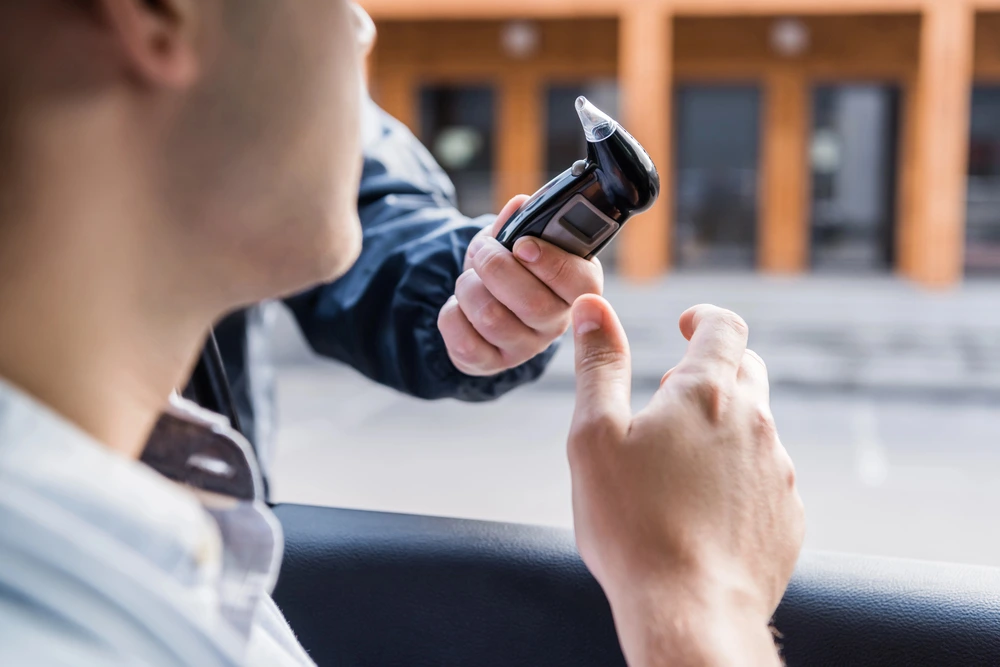
Can I Refuse a Breathalyzer Test in Texas?
When you get a driver’s license from the state of Texas, you are giving what’s known as “implied consent” to give a sample of your blood or take a breathalyzer test if you’ve been arrested for a DWI. However, this legal requirement is only valid if you’ve actually been arrested lawfully for a DWI. If you have not yet been arrested, you can legally refuse to submit to a test of any kind, not only breathalyzer tests and blood tests but also field sobriety testing.
If you’ve been arrested, but the arrest is later shown to be unlawful, then even if you took a breathalyzer or a blood test and failed it, that evidence could potentially be thrown out and the charges against you may be lowered or dropped. After you’ve been arrested, while you can still refuse a test if you want to try, the police have the power in some situations to compel you to take the test, and you will face penalties for your refusal. Even if they can’t compel you, the prosecutor will use your refusal against you in court.
When the Police Can Force You to Take a Test
As mentioned, there are some circumstances where the police can compel you to give a breath or blood sample. First, they must have reason to believe that you were driving while legally intoxicated. But one of the following things must also be true for them to force you to take a test:
- You have a previous DWI conviction that includes having a minor in your car
- You have two or more previous DWI convictions
- You have an intoxication assault or intoxication manslaughter conviction
- You have been involved in an accident where someone sustained serious bodily injury, had to go to the hospital, or died.
The police can also compel you to give them a blood test if they can get a court order for it.
What Happens When You Refuse the Test
At the time you are arrested for a DWI, you will be issued a temporary license that allows you to drive for the next 15 days, and your own license will be taken from you. You then have 15 days to contact the Texas Department of Public Safety to request a hearing. If you don’t do this, your license will automatically be suspended for the maximum amount of time allowed by law. This isn’t something you should ignore. Be sure to request that hearing right away, and be sure to contact a lawyer rather than try to fight this on your own.
At the hearing, the only thing that the judge considers is whether the police had a legitimate reason to pull you over. The court has zero interest in whether you were actually driving intoxicated, because that is not the issue. The issue is that, by obtaining your driver’s license, you agreed to take this test, and then you refused to do so. Therefore, the only question is whether the police had a legitimate reason to pull you over.
Reasons the Police Are Allowed to Pull You Over
To pull you over lawfully, the police must have reasonable suspicion that you were driving impaired. There are essentially four areas that the police are looking at to make this determination. The first is if you’re having problems keeping in your lane. This could manifest as weaving, straddling the lane line, swerving, or drifting. The second area is problems with speed or braking. If the police notice that you seem to be accelerating or slowing for no clear reason, having trouble stopping, are driving at variable speeds for no obvious reason, or are driving significantly below the speed limit, this is reason to pull you over.
The third area the police look at is evidence that you’re not paying close attention to what you’re doing. For example, if you’re driving the wrong way down a one-lane street or in the opposite lane on the highway, or if you stop in a lane for no reason, these are reasons to be suspicious. Also, if you drive without your headlights at night or fail to signal or signal actions that you don’t take, these indicate you might not be paying attention. Finally, the police will be looking at what are known as “judgment issues.” These are things that indicate a driver is not making good decisions, such as making improper lane changes, following too closely, making turns in a jerky or illegal way, or showing other types of inappropriate behavior like arguing and throwing things.
Specific License Penalties
Your license will be taken from you if you refuse the test; it’s also going to be taken from you in most cases if you are either convicted of a DWI or, even if you are not convicted, if you submit to the testing and it indicates that you had more than 0.08% BAC. If you fail the test, then even if you’re not prosecuted, you lose your license for at least 90 days if you’re over 21, and, depending on your history and the situation, you could face a license suspension of up to two years.
If you are younger than 21 and submit to the test, you’ll lose your license automatically for 60 days if there is any detectable alcohol in your blood or breath at all. If you are less than 21 years of age and refuse the test, then you automatically lose your license for 60 days.
Call a Dallas DWI Defense Attorney
The consequences for refusing a test are serious, but so are the consequences if you fail a test. You have to make the decision in the moment, but whatever decision you’ve made, contact the Pelley Law Office, LLP as soon as possible. We have offices in Dallas, Plano, and Sherman.
Contact Our Texas Criminal Defense Law Firm For Help Today
If you’re facing criminal charges in Texas, we’re here to help. Contact the experienced criminal defense lawyers at Pelley Law Office, L.L.P., today to schedule a free consultation.
We proudly serve Plano, Dallas, Sherman, and the surrounding areas.
Pelley Law Office L.L.P. – Plano Office
Address: 1312 14th St, Plano, TX 75074
Phone: (972) 608-0335
Hours: 24/7
Our firm is located near you. Find us with our GeoCoordinates: 33.0180322,-96.6952916,863
Pelley Law Office L.L.P. – Sherman Office
Address: 905 N Travis St, Sherman, TX 75090
Phone: (903) 813-4778
Hours: 24/7
Our firm is located near you. Find us with our GeoCoordinates: 33.6445846,-96.6113141,857
Schedule Your Free Consultation Right Now
Quit wasting time and making your situation worse by hoping your legal problems will go away on their own. They will not. Pick up your
phone and call us right now at 214-560-1919, or email us. Our experienced attorneys are ready to explain your options at a free
consultation. Why would you wait?
Locations
A Free Consultation
Fields Marked With An * Are Required

© Copyright 2026 Pelley Law Office, L.L.P.. All Rights Reserved.
